Carbon fiber pipes are used in applications where low weight and specific mechanical properties are important. However, choosing the right pipe involves more than matching its outer diameter and length. Geometry, wall construction, tolerances, and operating conditions all affect fit and performance.
This guide covers common carbon fiber pipe types, manufacturing methods, key benefits, industry applications, and the specifications buyers should confirm before placing an order.
Key Takeaways
-
Material and construction: Fiber orientation and resin type influence a carbon fiber pipe’s mechanical performance.
-
Dimensional accuracy: Outer diameter, inner diameter, wall thickness, and end geometry affect assembly and fit.
-
Material selection: Carbon fiber can reduce weight compared with metal, but suitability depends on the application.
-
Procurement: Confirm drawings, operating conditions, tolerances, and inspection requirements before production.
1. What Is a Carbon Fiber Pipe?
A carbon fiber pipe is a hollow composite component made from carbon fibers embedded in a polymer resin matrix. Its properties depend on factors such as fiber orientation, laminate structure, resin system, and manufacturing method.
When replacing a metal tube, matching the outer diameter and length does not automatically ensure equivalent stiffness or load capacity. For fluid-carrying applications, pressure resistance, sealing, chemical compatibility, and operating temperature must also be evaluated.
2. How Is Carbon Fiber Made Into a Pipe?
Carbon fiber pipes are produced using different methods depending on the required shape, dimensions, and performance.
Manufacturing Method
|
How It Works
|
Key Consideration
|
Filament winding
|
Continuous fibers are wound around a mandrel at controlled angles
|
Fiber orientation and winding pattern affect mechanical performance
|
Roll wrapping
|
Resin-impregnated fiber sheets are wrapped around a mandrel in layers
|
Layer arrangement influences stiffness and strength
|
Pultrusion
|
Continuous fibers are pulled through a resin system and a heated forming die
|
uitable for continuous profiles with a consistent cross section
|
These methods are not interchangeable for every design. Buyers should confirm the required structure, dimensions, and inspection criteria with the manufacturer before production.
3. Types of Carbon Fiber Pipes by Geometry
Straight Carbon Fiber Tubes
Straight carbon fiber tubes have a consistent cross section along their length. When specifying one, confirm the outer diameter (OD), inner diameter (ID), wall thickness, length, and end configuration.
45° and 90° Carbon Fiber Elbow Pipes
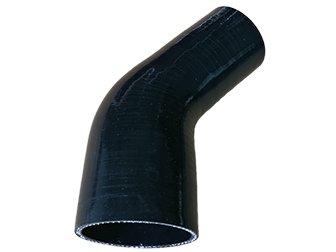
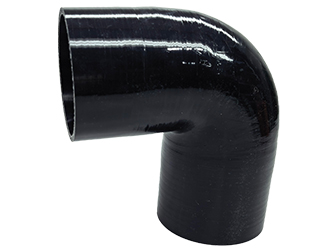
Elbow pipes change the direction of a tube within an assembly. SUNRISE offers 45° and 90° carbon fiber elbow options. Buyers should provide a dimensioned drawing that defines the angle, end dimensions, and overall geometry.
Reducing Carbon Fiber Tubes
Reducing tubes connect sections with different diameters. The drawing should specify both end diameters and the transition geometry. For fluid-transfer applications, pressure resistance, sealing, and material compatibility also require confirmation.
4. What Benefits Matter When Selecting a Carbon Fiber Pipe?
Weight and Mechanical Performance
Carbon fiber can provide a high stiffness-to-weight ratio, making it useful where reducing component weight is important. However, strength and stiffness depend on fiber direction, laminate design, and the loads applied. Confirm application-specific performance data rather than relying on the material name alone.
Environmental and Thermal Considerations
Carbon fiber composites do not rust like steel and can offer low thermal expansion in certain directions. Their performance still depends on the resin system, surface protection, temperature, moisture, and chemical exposure. When carbon fiber contacts metal components, the possibility of galvanic corrosion at the interface should also be considered.
5. Carbon Fibre Tube Uses Across Industries
Carbon fibre tube uses vary by design and performance requirements. Common application areas include:
-
Automotive: Lightweight structural components and specialized assemblies.
-
Industrial equipment: Equipment frames, support structures, and moving components where reduced weight is beneficial.
-
Bicycles and sporting equipment: Frames, poles, and other lightweight tubular components.
-
Specialized equipment: Custom structures designed around specific weight, stiffness, or dimensional requirements.
These are potential application areas, not a guarantee that every carbon fiber pipe is suitable for every use. Selection should be based on the component’s actual loads and operating environment.
6. Carbon Fiber Piping vs. Metal Tubing
Carbon fiber and metal tubing offer different performance characteristics. The right choice depends on the application, design requirements, and total cost.
Factor
|
Carbon Fiber Piping
|
Metal Tubing
|
Weight
|
Often lighter for comparable stiffness requirements
|
Generally heavier, depending on the metal and design
|
Mechanical behavior
|
Directional properties depend on fiber orientation and laminate structure
|
Properties depend on the metal grade, geometry, and heat treatment
|
Corrosion resistance
|
Does not rust like steel, but resin and surface protection matter
|
Varies by metal and environment
|
Thermal expansion
|
Can be low along certain fiber directions
|
Depends on the metal alloy
|
Processing
|
Requires composite-specific manufacturing and machining
|
Uses established metalworking processes
|
|
Cost
|
Can involve higher material and manufacturing costs
|
Varies widely by material and fabrication method
|
A comparison should use the requirements of the finished component, including load, temperature, environment, service life, and production volume, rather than material price alone.
7. How to Specify a Carbon Fiber Pipe for Procurement
Clear specifications help reduce fit issues, repeated revisions, and uncertainty during production.
Dimensions and Geometry
Provide a technical drawing or sample and identify the OD, ID, wall thickness, length, bend angle, transition geometry, and end configuration as applicable.
Tolerances
State the required dimensional tolerances and identify the critical measurements. SUNRISE’s listed 90° carbon fiber elbow product specifies an OD tolerance of ±0.25 mm and a tube length tolerance of ±3.0 mm. These values apply to that listed product specification and should not be assumed to cover every custom design.
Operating Conditions
Describe the expected loads, temperature range, exposure to chemicals or moisture, and any pressure or sealing requirements. These details help determine whether the proposed construction is suitable.
Surface and Connection Details
Specify the required surface finish, coating or color, and connection method. SUNRISE’s product listings include clear and colored coating options; availability should be confirmed for the selected design.
Inspection and Acceptance Requirements
Agree on the inspection items, measurement methods, acceptance criteria, and documentation required before production. A complete RFQ should include drawings or samples, quantities, intended application, operating conditions, tolerances, and quality requirements.
FAQ
How Do You Cut a Carbon Fiber Pipe?
Use a suitable cutting tool and secure the pipe to minimize movement and edge damage. Carbon fiber cutting can generate hazardous dust, so use effective dust extraction and appropriate respiratory and eye protection. Inspect the cut edge for fraying or delamination. For tight tolerances or critical components, use qualified machining services.
Can Carbon Fiber Pipes Be Drilled?
Yes, carbon fiber pipes can be drilled with suitable tools and controlled machining methods. Support the pipe properly, avoid excessive heat and force, and inspect the drilled area for fiber damage or delamination. For structural components, confirm that drilling will not compromise performance.