Choosing the right reinforcement material is essential when specifying a silicone hose for automotive, industrial, or high-temperature applications. Kevlar, fiberglass, and polyester are three commonly used reinforcement options, but they are designed to address different operating requirements.
So, which reinforcement is best for your application? A Kevlar reinforced silicone hose is suitable for demanding applications requiring high mechanical strength and heat resistance. A fiberglass reinforced silicone hose is designed for particularly high-temperature environments, while a polyester reinforced silicone hose offers a practical balance of flexibility, pressure handling, and cost for many conventional automotive and industrial systems.
For engineers, equipment manufacturers, and hose distributors, the right choice depends on operating temperature, working pressure, installation space, vibration, and expected service life. This guide compares the three materials and explains how to select the appropriate reinforced silicone hose for your project.
Silicone rubber is valued for its flexibility, temperature resistance, weather resistance, and long-term elasticity. However, an unreinforced silicone tube may not provide sufficient structural strength for applications involving internal pressure, repeated pressure fluctuations, or mechanical movement.
Reinforcement adds a supporting layer within the silicone hose wall. Depending on the fiber material, weave, number of layers, and hose construction, it can improve pressure resistance, dimensional stability, and mechanical durability.
Different reinforcement materials serve different purposes:
It is important to understand that reinforcement material alone does not determine the final hose performance. Silicone compound, wall thickness, reinforcement angle, layer count, and manufacturing process all influence the finished product.
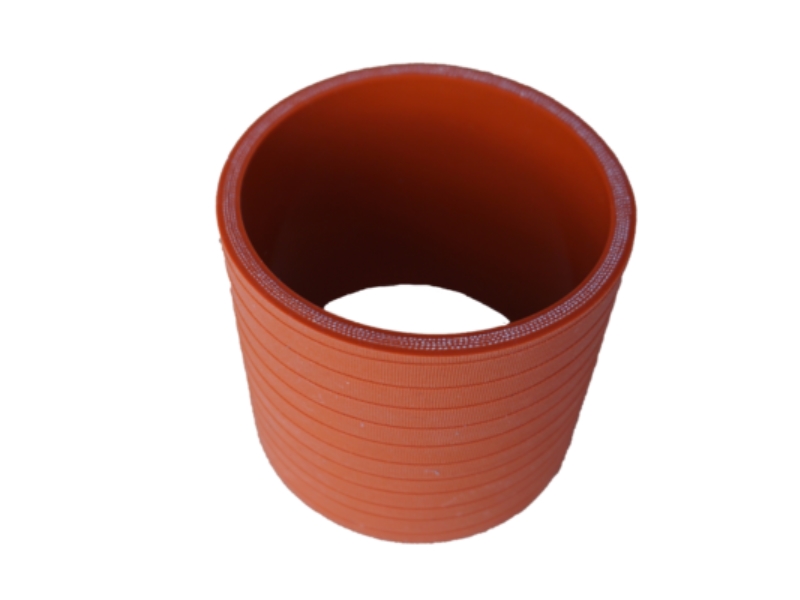
Kevlar is a well-known brand of aramid fiber. Aramid reinforcement is selected for silicone hoses that need a combination of high tensile strength, relatively low weight, and resistance to demanding thermal conditions.
Compared with conventional polyester reinforcement, aramid fibers can provide greater mechanical strength at a similar reinforcement weight. This makes them useful in applications where hose dimensions, weight, and mechanical loading are important design considerations.
Kevlar or aramid reinforced silicone hoses are commonly considered for:
For example, turbocharger and charge air cooler connections may experience elevated air temperatures, boost pressure, and engine vibration. In these conditions, reinforcement strength and the complete hose construction must be evaluated together.
SUNRISE manufactures Kevlar Aramid Reinforced High Temperature Silicone Hoses using hand-wrapped multi-ply constructions. The listed product is available in 4-ply and 5-ply designs, with a stated temperature rating of approximately -54°C to 266°C. Actual performance depends on the specified construction and operating conditions.
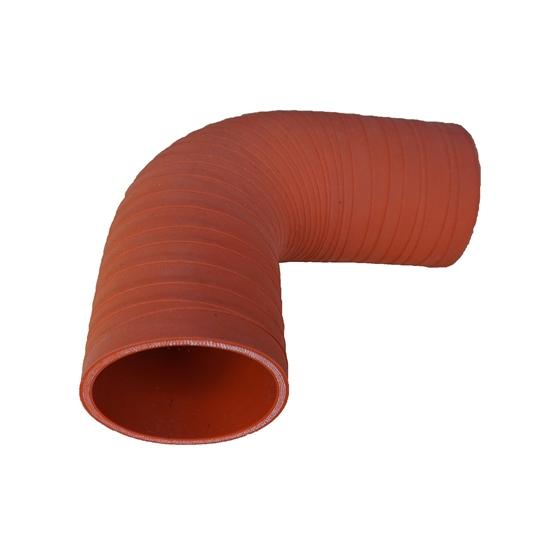
Fiberglass reinforcement is particularly useful when thermal stability is a major consideration. Glass fibers maintain their structural characteristics at elevated temperatures, making them suitable for specialized silicone hose constructions exposed to demanding thermal conditions.
Unlike standard polyester-reinforced hoses, fiberglass-reinforced designs are often selected for applications where heat exposure is a more critical factor than ordinary flexibility or cost.
Fiberglass reinforced silicone hoses are commonly considered for:
One important consideration is that fiberglass reinforcement is not automatically the best choice for every high-temperature application. Buyers should also consider vibration, bending requirements, pressure cycles, and the actual temperature at the hose wall.
SUNRISE offers Fiberglass Reinforced Silicone Rubber Hoses in hand-wrapped 4-ply and 5-ply constructions. The listed product has a stated temperature rating of -55°C to 280°C and can be supplied in straight, transition, and hump configurations.
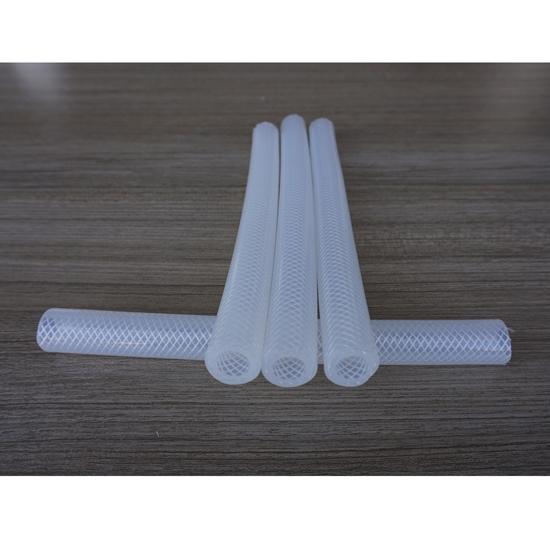
Polyester is one of the commonly used reinforcement materials in automotive and industrial silicone hoses. It provides a practical combination of flexibility, pressure handling, and manufacturing cost, making it suitable for a wide range of standard applications.
Polyester yarn is typically braided or incorporated into the silicone hose wall. This reinforcement improves the hose's ability to handle internal pressure while maintaining flexibility for installation in confined spaces.
Polyester reinforced silicone hoses are widely considered for:
For many conventional automotive applications, polyester reinforcement provides sufficient performance without requiring a more specialized fiber material. It is often a sensible choice when flexibility, installation convenience, and overall project cost are important.
SUNRISE manufactures Polyester Reinforced Silicone Hose with polyester yarn braiding inside the silicone wall. The listed product has a stated temperature flexibility range of -50°C to +200°C, while the described high-pressure and elevated-temperature application conditions specify temperatures up to 160°C. The actual operating limits should be confirmed for the selected hose design.
Although all three materials reinforce silicone hoses, their advantages are not interchangeable. The following table provides a practical comparison for engineers, purchasing teams, and equipment manufacturers.
| Comparison | Kevlar / Aramid | Fiberglass | Polyester |
|---|---|---|---|
| Main Advantage | High tensile strength | Thermal stability | Flexibility and versatility |
| Heat Resistance | High, depending on construction | Very high in suitable designs | Suitable for general temperature requirements |
| Mechanical Strength | Excellent tensile strength | Good structural and thermal support | Good for general applications |
| Flexibility | Depends on layer design | Depends on construction | Generally very good |
| Typical Application | Turbo and high-performance systems | High-temperature environments | Coolant, heater, and general-purpose systems |
| Cost Consideration | Specialized reinforcement | Specialized high-temperature construction | Generally economical |
Note: The comparison above describes general material characteristics rather than universal performance ratings. Actual temperature limits, working pressure, burst pressure, and service life must be confirmed against the manufacturer's specifications for each hose construction.
The best reinforcement material is the one that meets the actual operating requirements without unnecessary complexity or cost. Before selecting a hose, consider the following application scenarios.
Kevlar or aramid reinforcement is worth considering when the application requires high mechanical strength alongside elevated temperature resistance. The hose construction should be matched to boost pressure, air temperature, vibration, and connection geometry.
Fiberglass reinforcement is a suitable option when thermal stability is a primary requirement. It is particularly relevant for applications where the hose is exposed to high ambient temperatures or operates close to heat-generating equipment.
Polyester reinforcement is often sufficient for conventional coolant and heater applications. It offers a useful balance between flexibility, pressure resistance, and cost, provided the hose is compatible with the coolant and operating conditions.
For application-specific configurations, buyers can also review SUNRISE silicone hose products to identify suitable hose constructions for different vehicle and industrial systems.
Choosing a reinforcement material is only one part of the specification process. For OEM projects, replacement parts, and bulk purchasing, providing complete technical information helps manufacturers recommend a suitable hose construction.
Before requesting a quotation, buyers should prepare the following details:
A technical drawing, sample hose, or reference part can help clarify the required dimensions and connection geometry. For customized projects, the reinforcement structure and silicone compound should be evaluated together rather than selected independently.
Different applications require different combinations of reinforcement materials, silicone compounds, wall thicknesses, and hose shapes. A standard hose configuration may not always fit the installation space or operating conditions of specialized equipment.
SUNRISE Silicone Hose Co., Limited manufactures silicone hoses for automotive and industrial applications, with reinforcement options including polyester, aramid, and fiberglass. The company offers different multi-ply constructions and custom hose configurations to support specific project requirements.
Whether you need a flexible polyester reinforced coolant hose, a high-strength aramid reinforced turbo hose, or a fiberglass reinforced hose for elevated-temperature service, the selection should begin with the actual application conditions and technical specifications.
To discuss a custom project, provide your hose dimensions, operating temperature, working pressure, and application details to the SUNRISE team. You can also submit a drawing or sample for technical evaluation through the SUNRISE silicone hose manufacturer website.
Kevlar or aramid reinforcement is primarily valued for its high tensile strength and mechanical performance, while fiberglass reinforcement is particularly useful for applications requiring high thermal stability. The better option depends on the hose's operating temperature, pressure, and mechanical loading.
Yes. Polyester reinforced silicone hose is commonly used in automotive coolant and heater systems because it offers good flexibility and practical pressure-handling performance. The selected hose must still meet the vehicle's temperature, pressure, coolant compatibility, and dimensional requirements.
Fiberglass and aramid reinforced silicone hoses are both options for high-temperature applications. Fiberglass is particularly suited to thermal stability requirements, while aramid offers a combination of heat resistance and high mechanical strength. The manufacturer's rated operating temperature should always be checked.
No. Additional reinforcement layers can improve structural support, but pressure performance also depends on fiber type, braid angle, wall thickness, silicone compound, and manufacturing quality. Working pressure and burst pressure should be verified through product specifications or testing.
Yes. SUNRISE offers polyester, aramid, and fiberglass reinforced silicone hose options, with different dimensions, reinforcement constructions, and configurations. Buyers can provide drawings, samples, or application specifications for project evaluation.

Sunrise Silicone Hose Co., Limited


Adresse : Suite 805, No. 341 Jiahe Road, Xiamen City, Fujian Province, China
E-mail : sales@siliconehose-china.com